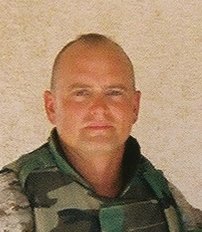
By Brian Bresnahan
I am in the habit of reminding others about the sacrifice of those who defend us. And willingly do so on days other than the holidays set aside specifically for that purpose.
So much emphasis is placed on remembering the deaths of the fallen, but I feel it more important to remember what they accomplished in the struggle for freedom. The words of a young Marine Lance Corporal from Lima Company, 3rd Battalion, 25th Marines are powerful reminders of what we need to focus on. In remembering his fellow, fallen Marines he said, “I want them to be remembered for what they did, not just because they died.”
What have the deaths of our fallen men and women attained?
Their deaths allow each of us to live freely. Their deaths let us fully experience secure lives of liberty and allow each man and woman to be equal. Their deaths allow each of us to exercise the unalienable rights of life, liberty, and the pursuit of happiness to which Our Declaration of Independence speaks.
Their sacrifice through each of America’s wars has been against a different threat, each needing to be fought differently. With each war, a new threat had to be understood and the doctrines of old had to be replaced with new strategies, tactics, and techniques. The warriors we honor, in their pursuit of victory, each, in some way, had to change and improve upon that which had been done before. They fought off the insistence for the old way of thinking and forged ahead on new paths toward victory.
And not only did they have to adapt to the new dangers presented by each enemy, but each time America’s citizens had to adjust to the new threat. Through the course of American history, our military and citizens alike have had to shake ourselves loose from that which had become normal, routine, common, and comfortable each time a new enemy arose.
And now, finding ourselves at war again, it is imperative we realize we are fighting a different kind of enemy in a different kind of war.
This enemy does not subscribe to the basic tenets of human morality. They don’t care about human life. Nor do they care about the rules derived from the God-given right of all people to exist; the same philosophies upon which our nation was founded.
This enemy follows no rules, even breaking the rules of the religion which they claim to fight in the name of. And they certainly don’t care about fighting us within the constraints of rules we see as necessary to civilized society.
This enemy thinks differently than any we’ve faced before. He does not play by any of the international laws of warfare that many in America contemplate when prescribing our conduct of the war on terror. Constitutionally, legally there is room to expand how we fight this enemy, but because it’s new it’s uncomfortable, and that makes it controversial. Being controversial makes it great political fodder. Thus, our national defense takes a backseat to political wrangling, political posturing, and the pursuit of personal power.
The enemy ignores all the rules, while we, with great danger to ourselves, insist upon wearing the cement shoes of inflexibility and antiquity, trying to invoke inapplicable Constitutional constraints because too many here hold politics and personal gain above common sense and national security.
The uniqueness of our Constitution gives us great power as a nation and has carried us through hard times, but it is not an inflexible document. As Alexander Hamilton wrote in Federalist Paper Number 23, "The circumstances that endanger the safety of nations are infinite, and for this reason no constitutional shackles can wisely be imposed on the power to which the care of it is committed." So, for the care and safety of our nation, we must work and adjust to meet this enemy which does not follow our Constitution, its articles, or the multitude of rules we have interpreted from it and imposed upon ourselves.
Those who have died fighting this new enemy in the Global War on Terror and those still fighting have, like the warriors before them, found ways to adapt to and defeat this new enemy. So, shouldn’t we as a nation honor their sacrifice by also finding new ways to defeat a new enemy, as we’ve done so many times before?
Beyond Memorial Day, remember those who have fallen in the Global War on Terror for all they’ve done to secure the future of our nation, Iraq, Afghanistan, and the rest of the freedom loving world. Remember them for crushing the Taliban, scattering Al Qaeda, removing Saddam, and establishing democratic nations where none existed. Envision the impact their sacrifice has on our future the way John Adams saw the future when he said of our first step toward freedom, "I am well aware of the toil and blood and treasure that it will cost to maintain this Declaration, and support and defend these States. Yet through all the gloom I can see the rays of ravishing light and glory. I can see that the end is worth more than all the means..."
Monday, May 29, 2006


Memorial Day Speech '06
By Brian Bresnahan
Given at Rising City, Nebraska, Memorial Day '06
(The weekly column I gleaned from this speech "Not Just On Memorial Day" is also posted above)
Friends and fellow veterans, thank you for the opportunity to speak today. I accepted this invitation humbly, honored that you would ask me to speak on such an occasion, but knowing full well that my words alone can not do justice to the accomplishments of those we honor today. Although I’ll try, I don’t know that anyone can truly describe the reverence we need to feel and the honor we need to bestow upon those who have died in defense of this country.
Today our focus is on remembering the deaths of the fallen. But the words of a young Marine Lance Corporal from Lima Company, 3rd Battalion, 25th Marines are powerful reminders of what we need to focus on. In remembering his fellow, fallen Marines he said, “I want them to be remembered for what they did, not just because they died.”
And what have all those whom we honor today done? What have their deaths attained?
They, through their deaths, have given us the right to stand here today. Their deaths allow each of us to live freely. Their deaths let us fully experience secured lives of liberty and allow each man and woman to be equal. Their deaths allow each of us to exercise the unalienable rights of life, liberty, and the pursuit of happiness to which Our Declaration of Independence speaks.
Those we honor today have fought in this country to secure its independence and then defended it when the British wanted it back in 1812. They fought to preserve this nation and prevent it from being split between the north and the south. They fought when Germany, while attempting to conquer Europe, also secretly tried to turn Mexico against us and drew us into World War I. They fought against totalitarianism, fascism, and Nazism to insure the integrity and longevity of not only our nation, but many others. They fought the evils of communism. They’ve fought in countless small wars in between, guaranteeing our interests, defending our freedoms and clearing the path for our march forward as a nation.
Each war was against a different threat to our way of life and as such, had to be fought differently. With each war, a new threat had to be understood and the doctrines of old had to be replaced with new strategies, tactics, and techniques. The warriors we honor today, in their pursuit of victory, each, in some way, had to change and improve upon that which had been done before. They fought off the insistence for the old way of thinking and forged ahead on new paths which led to victory.
And not only did those who went into combat have to adapt to the danger presented by each enemy, but each time America’s citizens had to adjust their way of life to the new threat. Through the course of American history, our military and citizens alike have had to shake ourselves loose from that which had become normal, routine, common, and comfortable each time a new enemy arose.
Histories lessons on each war are important, not just for the styles of warfare, but for understanding the threats all Americans faced and how the impact at home was different. For example, during World War II, when faced with significant threatening ideologies from abroad, we found ourselves having to give up some of the comforts we’d grown accustomed to. And we also found ourselves pressuring our own freedoms in order to protect us from and eventually defeat the enemy.
And now, finding ourselves at war again, it is imperative we realize we are fighting a different kind of enemy and a different kind of war. But, I honestly believe many American’s, by their words and actions, don’t realize that fact. I believe too many in America either do not comprehend the threat from Islamic extremists or foolishly think they’ll leave us alone if we simply mind our own business or try to be nice to them. Both are courses, which if pursued, will lead to further harm to our nation.
This enemy does not subscribe to the basic tenets of human morality. They don’t give a rip about human life. Nor do they care about the rules derived from the God-given right of all people to exist; the same philosophies upon which our nation was founded.
We fight an enemy which follows no rules, even breaking all the rules of the religion which they claim to fight in the name of.
They murder Iraqi tennis players simply for wearing shorts, because one interpretation of Sharia law says that it’s not allowed. Their answer to this “crime” is summary execution. They kill reporters who are critical of their terrorism, in one instance using the camera of a female reporter to record her own terrible public beating, torture and beheading.
This is how this enemy thinks. This is how they act. This is how brutal they are.
And they certainly don’t care about fighting us within the constraints of rules we see as necessary to civilized society.
In fact, they see our insistence on keeping ourselves bound to inflexible rules and strategies as opportunities and vulnerabilities to exploit. They laugh at us when we try to justify this self-imposed warfare handicap as holding ourselves to a higher standard, knowing full well that it’s simply another advantage for them. To them, it shows a weakness in us and weakness is what they feed on. Weakness in their opponent is what transforms this enemy from obsessive to rabid.
This enemy thinks differently than any we’ve faced before. He does not play by any of the international laws of warfare that many in America contemplate when prescribing our conduct of the war on terror. Constitutionally, legally there is room to expand how we fight this enemy, but because it’s new, it’s uncomfortable, and that makes it controversial. Being controversial makes it great political fodder. Thus, our national defense has taken a backseat to political wrangling, political posturing, and the pursuit of personal power.
Islamic Jihadists ignore all the rules, while we, with great danger to ourselves, insist upon wearing the cement shoes of inflexibility and antiquity, trying to invoke inapplicable Constitutional constraints because too many here hold politics and personal gain above common sense and national security.
The uniqueness of our Constitution gives us great power as a nation and has carried us through hard times, but it is not an inflexible document. As Alexander Hamilton wrote in Federalist Paper Number 23, "The circumstances that endanger the safety of nations are infinite, and for this reason no constitutional shackles can wisely be imposed on the power to which the care of it is committed." So, for the care and safety of our nation, we must work and adjust to meet this enemy which does not follow our Constitution, its articles, or the multitude of rules we have interpreted from it and imposed upon ourselves. So true leadership, focused on the defense of this great nation should find new ways to fight a new enemy. And just because something’s new or has not been done before does not mean it can’t be done or that it’s illegal. It can still fall within the framer’s intent and the parameters established by the Constitution, allowing us to fight this new enemy.
And it does take a different mentality to fight this enemy. After Vietnam, we eventually subscribed to what became known as the Powell Doctrine, and some still argue that we need to adhere to its philosophy. It works well when fighting another nation or state. But it doesn’t work when fighting against an ideology. It doesn’t work when fighting against terrorists who work in sleeper cells, hide among the populace, and won’t quit unless they’re dead or you’re dead. Because what drives this enemy is not nationalism, sovereignty, economics, imperialism, or any of the other motives which have caused nation to fight nation for hundreds or thousands of years. This enemy fights only to see you and I convert to Islam or die. That is their end state. Nothing less will suffice.
So today in honoring the memories, deaths, and accomplishments of all who have fought for this nation through all wars and the times in between, we also honor those who have died fighting this new enemy in the Global War on Terror. These young men and women, like the warriors before them have found ways to adapt to and defeat this new enemy, this new threat. But, let’s remember them for what they did, not because they died.
What have they done? They’ve freed nearly 50 million people from repressive, murderous regimes in Iraq and Afghanistan. They’ve given people an open road to freedom and democracy, allowing them to vote and choose their own destiny for the first times in their lives.
They’ve been relentless in their pursuit of terrorists in Iraq. Al Qaeda documents captured in Iraq in April show an enemy in disarray and discouraged because of the success our warriors have had. (Interestingly enough, those same documents also reveal the enemy feels they can win in the long term. They know they can’t defeat our troops, but they feel they can win because our press is so easy to manipulate, willingly portrays the U.S. as losing the war, and is forcing the American will against fighting through to victory.) The sacrifices of the fallen have allowed Iraq’s agricultural businesses to take off again, allowed an economy to boom, growing at a rate of 16%. They paved the way for 254,000 Iraqi Security Forces to become fully operational, now conducting 80% of all company level operations on their own or with coalition forces. And most recently, the sacrifice of those we honor today has allowed the Iraqi coalition/unity government to be established, moving the country on its way to independence, to being an ally for us, and a beacon of freedom and democracy in the middle-east.
We need to remember those who have fallen in the Global War on Terror for all they’ve done to secure the future of our nation, Iraq, Afghanistan, and the rest of the freedom loving world. Remember them for crushing the Taliban, scattering Al Qaeda, removing Saddam, and establishing democratic nations where none existed. Envision the impact their sacrifice has on our future the way John Adams saw the future when he said of our first step toward freedom, "I am well aware of the toil and blood and treasure that it will cost to maintain this Declaration, and support and defend these States. Yet through all the gloom I can see the rays of ravishing light and glory. I can see that the end is worth more than all the means..."
Today, we remember, not just those who died in the Global War on Terror, but all those who have fallen before them as well, all they’ve given us, and the freedom their sacrifice has blessed us with.
But, when I look around at the paths pursued by so many in the U.S., the relativism, the secularism, the political correctness, the requirement not to offend anyone, patriotism defined as attacking instead of never defending our country, and the constant attacks on the institutions which made this country what it is, I question if we comprehend the blessing of freedom we have? I question if we remember what those who have died have done for us? I question if so many take for granted what we really have here? Do we comprehend the oppression we would endure somewhere else or under a different form of government? Do we appreciate the fact we are the only country with the capacity to enjoy all that God has blessed mankind with? Or are we using the freedom we’ve been blessed with to tear down the systems and foundations which provide that very same freedom?
We live such comfortable lives, that we can’t stand a little inconvenience or discomfort. We can’t stand to be without. We’d rather holler about what we don’t have or what makes us uncomfortable than get up and do something about it. Have we lost our perspective and forgotten what true sacrifice is?
I sometimes hear people talk about how an experience here is hard, how they sacrificed this or that in a relatively inconsequential matter. I admit when observing those making mountains out of mole hills that I sit in irritated amusement, listening to alleged life changing experiences or how hard life is. I laugh in anger because all the while, I am thinking of the soldiers and Marines who fought through the streets of Fallujah. I am thinking of those who stormed the beaches at Normandy. I am thinking of places like The Argonne, Belleau Wood, Iwo Jima, Khe Sahn, Saigon, and Ramadi. If you want to talk about hard, life-changing experiences, talk to someone who’s been to one of those places.
But, is that the problem, and the question at hand? Have we forgotten what it takes to fight and sacrifice as a nation? Have we lost perspective on what it’s like to have to struggle for freedom?
Have we forgotten the sacrifices of WW’s I and II, of Korea and Vietnam? As a nation have we forgotten the sacrifice it takes to win? In fighting this war we don’t have conscription, gas rationing, food rationing, victory gardens, recycling drives, or applications for construction material to rebuild a burned down church. Instead we down size the military while at the same time arguing for tax cuts and increased funding for social and welfare programs, and then complain about gas prices and the cost of cable TV. I believe that we have forgotten what sacrifice is, because so many here have not had to sacrifice to ensure our freedom and prosperity.
Although I appreciate it, we take time only once a year to remember those who have paid the ultimate price. I suspect we as a nation take even less time to remember and consider how we got to this day, and all the other sacrifices which were necessary through the course of America’s history to make this country what it is.
So, if we are off course as a nation, how do we set ourselves back on course?
I think we begin on this day. We do so by not just remembering those we honor today, but we remember and honor what it is they fought for and what brought our nation this far. Today we should question how far we’ve strayed from the principles and morals for which our fallen veterans fought and died. Now, now is the day, above all other days for each one of us to ask whether or not we honor their sacrifice with words and actions that uphold the American ideals this great nation was founded upon. We must ask ourselves if we understand and have a full appreciation for the liberty and freedom we enjoy and if we comprehend why those who died for it did so?
I leave you today with two quotes to contemplate as you ask yourself where it is you stand and what it is you can do, as men and women of action, to support this country and their sacrifice. The first is from Plato who said, "The punishment of wise men who refuse to take part in the government is to live under the government of worse men." The second is from Edmund Burke, “All that is necessary for the forces of evil to win in the world is for enough good men to do nothing."
I encourage all of us to honor the good men and women who have given the ultimate sacrifice by exercising every act of freedom and democracy which their deaths have insured and secured for us. Thank you.
Wednesday, May 24, 2006
Two Who Should Know Better
By Brian Bresnahan
The original thank you to Vietnam Vets I refer to in this column is in the blog post preceding this one.
When I was in Iraq, the amount of personal support we received from home was incredible. It caused me to reflect on the situation and realize the disparity between the support we experienced and the support experienced by those who fought in Vietnam.
I wrote about the differences and forwarded my thoughts, essentially as a “Thank You,” to all Vietnam vets. It was a “Thank You” not only for their service, but also a “Thank You” because their experience in and returning from Vietnam showed the American people how not to treat our servicemen and women. Today’s soldiers, sailors, airmen, and Marines are the benefactors of the hard lessons learned by Americans which came at the expense of our Vietnam veterans.
Much to my surprise, that letter grew legs. It was read at many veteran’s functions and events. News stories reported it bringing tears to the eyes of some vets who had never been thanked for their service. When I got home, I had complete strangers calling me from across the nation to thank me for writing it. It was a truly humbling experience to have those I hold in such high esteem thanking me for showing my appreciation for their sacrifice.
My recent columns are reaching more people than I ever expected, and I am once again being contacted by Vietnam vets. They tell me to keep writing because they believe in our victory in Iraq and at the same time wish someone would have shown them this type of support. They wish there would have been loud voices standing up for them and their mission, countering those who desired an American loss in Vietnam. When someone who’s been through the hell of a place like Ia Drang calls to thank me for what I’m doing and encourages me to keep supporting our troops and our victory, I can’t help but stay in the fight.
I share those experiences not as a boast or proclamation, but as a testimonial to the powerful impact that pro-troop, pro-mission support can have on the outcome of a war, especially when compared to the negativity of anti-troop, anti-war sentiment.
That being said, it then stands to reason that those who served in Vietnam would understand as well as anyone the damage done by Americans who attack their own country, yet never criticize the enemy. That they would recognize the harm done by politicians who adamantly insist, despite evidence to the contrary, that we are losing a war and that we need to turn tail and run. That they would be sensitive to the effect the anti-war movement has on America’s potential for victory and the morale of our troops.
It doesn’t mean they all have to support the war, and I know there are some who don’t. It is their right to do so and I would never begrudge them their opinion.
But I do question two veterans in positions of responsibility, Chuck Hagel and John Murtha, who spew forth anti-war, sometimes anti-troop, positions. They should know as well as anyone that their statements portray the same attitudes that made the return from Vietnam a domestic hell for some of their fellow vets and forced America to lose that war.
After each major step forward by the Iraqi’s, election after election, and progressive step after step, Chuck Hagel has refused to acknowledge any success in Iraq. Instead, he follows a philosophy of the latest step being relatively unimportant, the next step as more critical, and then showers that step with doubt. Yet, when that step is made, there is no triumph acknowledged. Instead we hear the same: the step taken is irrelevant and that we are losing the war. His ongoing stand against any success in Iraq is reminiscent of the same anti-war domestic political posturing seen during Vietnam.
John Murtha’s attacks against the war and our attempts to defeat terrorists have been incessant. But, last week he spiraled downward, moving from attacking the war effort, to attacking our Marines in Iraq. He held his own personal media trial, immediately condemned, and then convicted the Marines being investigated for an alleged atrocity at Haditha. If the allegations turn out to be true, all involved should be punished accordingly. But to have immediately and publicly convicted the Marines the way he did, long before the investigation was even finished, let alone allowing the Marines a fair trial, was a disgusting display of his feverish pursuit of our defeat. His words and actions mirror those which were designed to and eventually created the internal discontent that forced our loss in Vietnam.
I think many veterans, as I do, look at those who have gone before and see them as a notch above us. As having endured more. As having sacrificed more. We hold them in higher esteem than we might ever hold ourselves.
But Hagel and Murtha are definitely off my list. Because of the Vietnam experience, they should know better than anyone not to do what they’re doing, yet they lead the charge to stir up enough anti-war sentiment to force our surrender. They lead the charge toward instilling courage and confidence in our enemies who know they only have to defeat the American will, not the American troops.
Original Thank You to Vietnam Vets
This is the letter I sent home when I was in Iraq in 2004.
A guy gets time to think over here and I was thinking about all the support we get from home. Sometimes it's overwhelming. We get care packages at times faster than we can use them. There are boxes and boxes of toiletries and snacks lining the center of every tent; the generosity has been amazing. So, I was pondering the question: "Why do we have so much support?"
In my opinion, it came down to one thing: . I think we learned a lesson, as a nation, that no matter what, you have to support the troops who are on the line, who are risking everything. We treated them so poorly back then. When they returned was even worse. The stories are nightmarish of what our returning warriors were subjected to. It is a national scar, a blemish on our country, an embarrassment to all of us.
After , it had time to sink in. The guilt in our collective consciousness grew. It shamed us.
However, we learned from our mistake. Somewhere during the late 1970's and into the 80's, we realized that we can't treat our warriors that way. So, starting during the Gulf War, when the first real opportunity arose to stand up and support the troops, we did. We did it to support our friends and family going off to war. But we also did it to right the wrongs from the era. We treated our troops like the heroes they were, acknowledged and celebrated their sacrifice, and rejoiced at their homecoming instead of spitting on them.
And that support continues today for those of us in . Our country knows that it must support us and it does.
The lesson was learned in and we are better because of it.
Everyone who has gone before is a hero. They are celebrated in my heart. I think admirably of all those who have gone before me. From those who fought to establish this country in the late 1770's to those I serve with here in . They have all sacrificed to ensure our freedom.
But when I get back, I'm going to make it a personal mission to specifically thank every Vietnam Vet I encounter for their sacrifice. Because if nothing else good came from that terrible war, one thing did. It was the lesson learned on how we treat our warriors. We as a country learned from our mistake and now treat our warriors as heroes, as we should. I am the beneficiary of their sacrifice. Not only for the freedom they, like veterans from other wars, ensured, but for how well our country now treats my fellow Marines and I. We are the beneficiaries of their sacrifice.
Semper Fidelis,
Major Brian P. Bresnahan
Tuesday, May 16, 2006
In Pursuit of Freedom
By Brian Bresnahan
I believe the Creator has instilled within all people the capacity for free will. This in turn yields a universal desire to be free, to live as we choose, and to do so with others, all under the auspices of His commands.
My experiences with the Iraqi people proved to me, that they too, are subject to this universally applicable imperative which solicits a desire for freedom.
My “job” in Iraq allowed me the privilege of working directly with the Iraqis several days per week. I worked in a capacity which could directly improve their lives, or at least provide some degree of solace for a suffered loss. Through these endeavors, and over the course of the first couple months, I saw a very distinct change in their attitude toward me, toward us, our mission there, and a growing appetite to take the initiative on matters which might improve their own lives.
Getting them to take the initiative like this was, in and of itself, an incredible challenge. The group I worked with was of the mindset that everything happens because Allah wills it to happen. They would openly ask, “Why take action on my own behalf?” Their point of view was “The outcome is not up to me. My choices and actions do not matter. It’s up to Allah to decide my fate, and I’ll faithfully accept his will and the direction he chooses for my life.”
But, because within each person is planted a seed which gives rise to the capacity for free will, eventually all people will choose the course of freedom. All they need is for the seed to be nurtured.
As the Iraqi’s and I became better acquainted we were able to discuss subjects beyond the business at hand. We talked about the same things that friends here might discuss. Friendships were formed and trust grew.
I explained that we weren’t there to occupy their country. When they finally understood we were only there to help, and that we wanted to go home when our time was up, just as much as they might want us to leave, the relationships grew more.
As they saw us helping them rebuild their lives, they began to realize the difference between us and the insurgents. The insurgents, either directly or indirectly, were the source of hardship, difficulty, or danger in their lives. The contrast between what we brought to the table and the problems caused by the insurgents was discussed and understood.
And then they made the conscious choice of those in pursuit of freedom. They chose to act on their own behalf, to exercise their free will for the purpose of framing a vision for the future and a better life. In spite of the danger to themselves, certain death if they were discovered, they started telling us who the insurgents were, where they were, and how we could find them.
Our conversations were altogether different after that. They began to share their hopes and what they wanted in life. These new friends began to share the desire for a better life for themselves and their children. I learned they wanted the same things out of life that you and I want - to be mom’s and dad’s, to make a decent living, to simply be safe and happy. And they acknowledged, with clarity, that the paths to those things were the paths of democracy and freedom.
Although they lacked an understanding of democracy, they knew, by the example of the United States, that democracy was the means by which freedom was attained. Details about democracy beyond the act of voting were nebulous, but freedom they understood.
Their new-found will to freedom and fresh entry into democracy progressed from a basic knowledge of these novel concepts into acts of freedom. Despite threats from terrorists, the Iraqi’s decided their own future, voted in three elections, and celebrated in the streets, rejoicing in the hope for a better life.
Living freely, they now charge forward with businesses and entrepreneurialism. They pursue capitalism, the only economic system which enables democracy and freedom to flourish; the only system that gives them a chance to raise their standard of living and lift the poorest among them from abject poverty.
Their choice to turn on the insurgents (the event that signified their aspirations for freedom) is now being repeated at record levels. For the month of April, the Multi National Forces received 5,855 tips about the insurgency from Iraqi civilians.
The willingness of the Iraqi’s to step up like this indicates strong hope for the future. It indicates an improving security situation – they wouldn’t come forward like this if it weren’t safe to do so. That in turn tells us our troops and the Iraqi troops are succeeding.
But most encouraging of all, it shows that more and more Iraqi’s are openly, personally pursuing freedom, spurred to do so because the seeds of freedom have been nurtured and enabled.
Subscribe to:
Posts (Atom)

 Posts