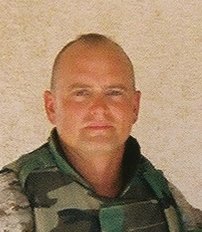
Sterling is the name of the man who owns the hardware store where I live. But Sterling is much more than just the owner of a hardware store. He’s a veteran; a veteran of the Korean War. In fact, Sterling was awarded the Silver Star for heroism after fighting near Hagaru Ri and a Purple Heart later during that war. Anyone who knows anything about the Chosin Reservoir immediately recognizes the name Hagaru Ri and has an appreciation for the kind of fight Sterling must have had against the waves of Chinese attacking from the north.
I recently stopped at the hardware store to renew my American Legion membership. Sterling’s also an officer for our local American Legion Post. He asked if I was going to be attending our town’s Veterans Day program. I replied that I didn’t think I could attend because I was scheduled to give a speech at Fort McPherson National Cemetery.
Sterling then paused and he took off his glasses with one hand, looked at me and ran his other hand through his white hair. After a moment he said to me in a calm, but sincere voice, “there’s a good friend of mine buried there. He was hurt bad during the war, right near me. He died there in Korea. I’ll never forget him. I can still see his face.”
With the revelation of each fact, Sterling paused, as if weighing the gravity of individual memories now coming alive once again.
He continued, “I’ve visited his grave there at Fort McPherson. He’s buried near the flag pole. I’ve shed a lot of tears for him over the years. He was from Nebraska City. His name is Duane Hoyle.”
After my time in Iraq, I really don’t have many fears. But I suddenly realized at that moment I was afraid of something I’d never thought about. I was afraid, that unlike Sterling who hadn’t forgotten, I would forget the names of the Marines I served with in Iraq. Even though they were alive, I was afraid I would lose touch with them and eventually forget their names. Suddenly a name meant more to me than I could have ever imagined.
Standing there with Sterling, all of my friends’ call signs started running through my head, but their names were escaping me. I almost panicked. I could remember “Moe, Troll, Grumpy, Bronco and Dirt,” but their real names were briefly, inexplicably lost.
I quickly regained my thoughts and the names rushed back to me, but the fear of forgetting those names was now irreversibly imprinted in my mind. We finished the business at hand and I left the hardware store, enlightened by the experience, knowing that in a very small way, I now understood the fight at Hagaru Ri just a little better than I had before.
I was humbled by the shared memory. Not just by the willing openness, but in the fact that during one brief encounter a very personal, living history of the Korean War was opened right before my eyes and made available as a lesson that will remain with me for the rest of my life.
It also reaffirmed my perception, whether right or wrong, which causes me to believe that those who served in previous wars, the warriors of previous generations, should be held in higher esteem than we should ever hold ourselves. Even though we might have “been there and done that,” we sometimes still consider our predecessors as more deserving of the title “veteran.” The proof for this philosophy was endorsed yet again with that one trip to the hardware store.
I also knew this had been one of those lessons that can make us better people, if, in this case, for no other reason, than to make me a better “name” person because I’m not very good at remembering people’s names. I’ve resolved to be better at it now.
But most importantly, Sterling taught me a lesson that day about the power of a name. Obviously every name is personal, but it’s the experiences of and with the people who belong to each name that gives power to something as simple as a name.
For veterans and all citizens, remembering the names and service of those who fought our nation’s wars and then participating in the development of our nation’s future not only honors those who’ve fought, but most importantly it solidifies that for which they fought.
Personally, I’ll honor those I served with and what they believed by remembering their names and passing along their deeds from Iraq. I won’t forget Adam low-crawling up to potential IEDs. I won’t forget Matt calling in air support even while being shot at with RPG’s. I won’t forget Mark’s voice ripping through the night, motivating a lackadaisical convoy. I won’t forget the calm in Ric’s voice as he talked an ambushed unit through a fire fight over the radio. I simply won’t forget most every experience with Rod who’s back there now training Iraqi soldiers.
And I’ll honor both Sterling and his friend, Corporal Duane Hoyle, by visiting Duane’s grave when I give my speech at Fort McPherson and letting him know that Sterling sent me.
Saturday, November 11, 2006


Tuesday, November 07, 2006
Fighting for Those Who Fight Against Us
I sometimes question the sanity of having fought for the rights of those who, by virtue of their every endeavor, seek to destroy the foundations of the country I fought for. In raising my hand and swearing to “support and defend the Constitution of the United States” I know that my oath required me to defend all Americans, everyone benefiting from the rights of the Constitution. But I sometimes have trouble getting my head around the idea of having defended anyone whose mission it is to attack those rights.
I ask that question with each mailing I get from the ACLU. No, I didn’t apply for membership to the ACLU. I guess, as some sort of sophomoric joke, someone signed me up; most likely one of the liberals who takes offense at my publicizing their positions. So I kept the membership. It’s like spying on the enemy. It reminds me of all the time I spent finding out what the bad guys were up to in Iraq.
The latest mailing from them was an attack on faith. It came as a solicitation for donations to fight anything and everything “faith-based.” It was four pages warning of attempts to transform “our country from a constitutional democracy to a thinly-veiled theocracy.”
The sales pitch by the ACLU is that they need my money for defending “religious liberty.”
But all of us who have watched the ACLU operate know their agenda is definitely not defending religious liberty. It is the denial of religious liberty. It is the denial of expression of religion by those who are religious. It is not the separation of church of state. It is elimination of the church from the United States.
I have heard the ACLU called “the most dangerous organization in the U.S.” I would agree. Their position on faith is a perfect example. They adamantly oppose faith in our country, but are the same group which has committed so many of its resources to defending the rights of religious terrorists. They have fund drives to fight against faith in the United States while at the same time fighting for the rights of those who, because of their faith, have declared holy war against the United States. Their mission is to tear apart the foundations of religion in this country while at the same time defending the terrorists who are intent upon the destruction of this country for religious purposes.
In the same mailing they also attack abstinence because it has, at least in part, support by religious groups who use their funding to promote abstinence. Abstinence itself is described as a “woeful excuse for health education” and puts “the health and well being of thousands of young people at risk by failing to give teenagers the facts they need to prevent disease and unwanted pregnancy.”
Last time I checked abstinence worked for preventing both pregnancy and disease every time it was tried. How irresponsible is it of any group to attack a 100% proven method for protecting our children, regardless of the base of support for that method? It shows the immorality of their ideology and the disregard they have for the consequences of their actions.
And then they move on to the defense of abortion, or as they refer to it, “reproductive rights.” If it weren’t so serious, that term itself would be laughable. Trying to disguise the destruction of life as the right to create life has got to be one of the most semantically clever yet grotesque uses of the English language ever.
Their atheistic comprehension of the argument prevents them from grasping why opposition to abortion and the wanton destruction of life is based primarily on religious precepts. Evidently, the ACLU doesn’t feel those who oppose destroying life are entitled to that opinion on those grounds. Sorry ACLU, those religious principles are the same ones that constitute the very fabric of this country, and pro-life groups are entitled the right to invoke those foundational principles in developing and stating their views, just as much as you rely on your impious ideology to oppose them.
As noted before, they seem convinced of an existing threat to transform our country into “a thinly-veiled theocracy.” Nice scare tactic, but maybe they need to study those places in the world where theocracies actually exist to see how far from a theocracy our country is. Evidently no one from the ACLU has been to a militant Islamic country where other religions aren’t even allowed and beheadings await those who don’t believe in Islam.
Maybe they need to visit Saudi Arabia or Iran. Those are theocracies. Our country isn’t even in the same game with them, nor is it anywhere near the ball-park, driving toward it, or even thinking about buying tickets to that game.
Our country’s biggest problem is exactly the opposite; the need to fight against those, like the ACLU, who want to deny all of us our religious freedoms, regardless of which religion we choose.
In fighting against them, I should also say “thanks” to the ACLU for the mailings. Even though I’m not proud of having fought for them, I’m glad I could be a drain on their resources and help illuminate their positions.
Sunday, October 29, 2006
Histories Lessons on Intentions
I often marvel at the intellect of our forefathers.
The wisdom, foresight, and intelligence they displayed when writing our Constitution and the arguments they made to the people for acceptance never cease to capture my imagination and amaze me. They obviously had a vision for the endurance of that document and the applicability of those arguments, as both continue to guide our country and provide clarification to our nation’s direction.
In forging the future of our nation, they enumerated for us specific rights granted by what became known as The Bill of Rights.
But through The Federalist Papers, in arguing for a republic, for a federal government with individual state governments instead of individual sovereign state nations or small confederacies of states, they also provided some insight and caution which notes the existence of a line between individual rights and the needs of a nation.
In their time, the argument for individual sovereign states or small confederacies of states was being made, at least partially, on the grounds of the rights of individuals. It was proposed that a republic would deny the rights of individuals, and only through smaller entities would an individual’s rights be preserved. “Scare tactics” of the day were utilized to invoke fear that a republic would strip away the rights they’d just recently fought for.
In rebuttal, Alexander Hamilton pointed out where the true threat to their rights lay, “An over scrupulous jealousy of danger to the rights of the people…will be represented as mere pretence and artifice; the bait for popularity at the expense of public good.” And “…a dangerous ambition more often lurks behind the specious mask of zeal for the rights of the people, than under the forbidding appearance of zeal for the firmness and efficiency of government.”
He and John Jay went on to describe the “public good” and “firmness and efficiency of government” to include matters of national strength, or in today’s terms, national security.
In this light, their sentiments and observations are extremely applicable today, particularly as they relate to our current national security situation and the positions of the far left and their cohorts at the ACLU.
The radical left used an overly ambitious strategy based on “rights” when attacking the use of military tribunals for suspected terrorists caught on the field of battle and the methods used to obtain information from them. As a result, the courts demanded further legislation from Congress. The Administration then worked with Congress to develop and approve the legislation necessary to satisfy both the needs of the courts as well as the national security needs of the people. Yet Senators like Russ Feingold and his friends at the ACLU attacked this new legislation and poured out doom and gloom for the rights of all.
They continue to exploit the argument for civilian rights and trials of enemy combatants caught on the field of battle. They argue against the interrogation methods that have prevented attacks against us, accusing those who obtain the information and those who protect us of torturing prisoners. They try to make us imagine that our servicemen and public servants are physically harming prisoners, using the most heinous, harmful tactics our imaginations can summon. They argue that moral equivalency exists between stress positions and cutting, cold rooms and dismemberment, loud music and breaking of bones, water boarding and beheading. They do so to scare us into believing our individual liberties are at risk.
They also fought against The Patriot Act, even boasting when they thought they’d killed it. They fight against domestic phone surveillance of Al Qaeda. They argue against tracking the financial transactions of our known enemies. They do so all in the name of guarding our rights and freedoms.
All the while they fulfill the words of Alexander Hamilton. His words are nearly prophetic in this case.
They’ve made vicious attack after vicious attack, disguising these attacks as in the best interest of our rights. Yet their intent is very clear. It is their will to power which drives their position. It is the “dangerous ambition” spoken of so long ago which drives them. All the while they attempt to hide it behind the “mask of zeal for the rights of the people.” The argument is simply “the bait for popularity” in trying to regain power in Washington.
Normally, all of us would be appreciative of someone arguing on our behalf, for the rights we believe are endowed upon us by our Creator. But not so in this case, where the intentions are obviously twisted. If it were for our protection, I would accept the position of Feingold and the ACLU. But the warning delivered to us so long ago allows us to recognize their true intentions. Because they argue against the security of our nation, they actually argue against our individual best interests and the longevity of our freedom.
And where do their positions lead? Where did our forefathers warn us their motives would take us? They tell us that theirs “has been found a much more certain road to the introduction of despotism…and that of those men who have overturned the liberties of republics the greatest number have begun their career by paying obsequious court to the people, commencing Demagogues and ending Tyrants.”
Acting for Self Interest
“But if we are to be told by a foreign Power... what we shall do, and what we shall not do, we have Independence yet to seek, and have contended hitherto for very little.” George Washington
Makes me wonder why in the world we put so much stock in the European Union and United Nations when it comes to the national security interests of our country.
When did we lose sight of those ideals which adamantly insistent upon our retention of independence and liberty above all else? When did we lose sight of what was in the best interest of our country and demand its submission to the whims of the international community?
The day politics and the will to power trumped national security in America, that’s when. Although not a uniquely American problem, it is a predicament which appears to have only become a problem in America.
Other countries don’t appear to have let politics trump their own national interests or national security the way we have.
Through the course of all the negotiations and diplomacy which have taken place at the United Nations and European Union concerning Iraq and Iran, and the six parties involved with the North Korea situation, other countries have acted in their own best interest.
Concerning Iraq, France worked vigorously against us. They had much to hide in the “U.N. Oil for Food Scandal” and much to preserve economically in regard to their trade with Iraq. I understand why they worked against us. They were acting in their own best interests.
But, when we acted in the interest of our national security, others abroad didn’t like it. Our actions were contrary to the future plans they had for their countries, they were looking out for themselves while demanding that we shouldn’t.
North Korea has acted in what it considers to be its own best interest, shielded at every turn by China who is doing the same. After voting for sanctions they are now considering not enforcing them. But why shouldn’t both these countries act as such and why is it a surprise that they have? Sure I think Kim Jong Il is an absolute mad-man with nothing to offer the world but instability and nuclear fallout. But, he’s acting in what he considers his own best interests. No U.S. administration, of either party, was going to stop him from doing what he was intent on doing. Clinton failed and so did Bush. Not because they were ineffective, but because Kim Jong Il was going to move forward with a nuclear program either way.
We also have a tough situation in Iran. They’ve repeatedly thumbed their nose at the entire international community. But why shouldn’t they? They’re acting in what they feel are their own best interests. I don’t like it or agree with it, but I get it.
Russia and China are assisting Iran, because they obviously feel it’s in their best interests to do so. So, why does it come as a surprise that the European Union and United Nations have been ineffective at dealing with Iran? After all, Iran is going to do what Iran thinks it needs to do, regardless of international carrots and sticks, American administration in place, or diplomacy intended to change their minds.
These may be seemingly insurmountable obstacles, but they don’t leave us in an untenable situation. That is until America is not also allowed to act in its best interest because at every turn liberals here put their own interests ahead of America’s, demand their right to hypocrisy and a resolute need for following the United Nations when politically expedient, and then throw tantrums demanding that all of us submit our security to their political interests.
Their politics and their will to power trump all else. They take positions opposite of what is right, simply for the sake of doing so. Their division of America for these reasons decreases the power America is capable of wielding in the world.
The liberals howled because we were “going it alone” in Iraq. And now they howl because we aren’t going it alone on Iran and are bellowing about failures because we didn’t go it alone with North Korea in pursuit of a Bill Clinton proven path to failure.
The actions of liberals here parallel the actions of those who work so aggressively against our country. Their own interests trump the national security of our country. Their will to political power comes ahead of all else as evidenced by their hypocritical, inconsistent positions on Iraq, Iran, and North Korea.
Sometimes our best interests intersect with the interests of other countries and it is right to pursue multi-lateral options and solutions. I understand that our interests are often the same as another countries and working toward common goals is a necessity. However, our words and deeds must remain focused and unified on our own security when pursuing such goals. None of us should be so willing to subject our security to politics and the will to power.
So until liberals lose their obsession with the United Nations, can honestly stand on a position of America first politics second, and place their own interests and will to power behind national security, America will remain divided and weakened with respect to its status on the world stage.
Thursday, October 12, 2006
Shifting Mentality
A very good friend of mine is back in Iraq now. He’s leading a team of Marines who are training Iraqi soldiers. Not only am I happy for my friend because he’s doing what he loves to do, but I’m proud of his being part of the future of Iraq.
The future of Iraq is not just about standing up their army and rebuilding roads, schools, or hospitals. It’s about rebuilding the Iraqi people as a people. And that’s what my friend is doing, as much as helping to stand up their army.
In the documentary “My Country, Iraq” there is an interview with what appears to be a local Sheik whose words are rather insightful into his country’s situation. He speaks to the fact that the biggest casualty of Saddam Hussein’s era and the war which ended it was not the local cement factories or other infrastructure. He said the biggest casualty of Saddam Hussein was the mentality of the Iraqi people. It would take much longer to rebuild the mentality of the Iraqi people than it would any of the physical structures.
I agree. The biggest challenge we and the Iraqi people have faced is getting an entire generation (my generational counterparts in Iraq) to step to the plate, lead, administrate, and be free citizens in a new form of government which serves their best interest, but in which no one has any experience implementing or operating. After 30 years of Saddam Hussein’s oppression, there was a huge vacuum of refined leadership capability and a lack of the concepts for leadership.
Enter the Provincial Reconstruction Teams (PRTs). According to Multi-National Forces Iraq spokesman, Major General Caldwell, “the Provincial Reconstruction Teams teach, coach, mentor Iraqi civil leaders at all levels in the methods and means for developing governance capacity, promoting increased security, rule of law, political and economic development, and assisting provincial administrations to meet the basic needs or essential services of their populations.”
It was announced this week that 7 of the 10 planned PRTs are now in place to accomplish the tasks detailed by Major General Caldwell and move the Iraqi people forward; to help overcome that which has been the biggest obstacle to rebuilding Iraq.
The PRTs also represent a light at the end of the tunnel for our being able to leave a stable Iraq because “PRTs also transition the rebuilding efforts from us to the Iraqi’s…and leverage the Iraqi’s ability to build their future.” They are not only an essential step to rebuilding the mentality of the Iraqi people and providing the skills for self governance, but essential to empowering the Iraqi’s to rebuild their own country.
But of course security is critical to self-governance and that’s where my friend comes in again, training Iraqi soldiers. At this point, there are, according to Major General Caldwell, “a total of six Iraqi army division headquarters, 30 brigades, 89 battalions that are in the lead in their respective areas of operation.” Even though the Iraqi soldiers continue to be prime targets themselves, there has obviously been a shift in mentality of many Iraqi’s to forego the risk and join the army.
We also see a shift of attitude in the Al Anbar province. A report by the L.A. Times this week shows how the preference for action and initiative has taken hold and is growing. They reported that an agreement among tribal leaders there has held together. The tribal leaders had pledged to “clean out Al Qaeda insurgents” and were “as good as their word.” After the Iraqi’s had suffered “more than 8,000” casualties at the hands of the terrorists and facing “insurgents' demands for adherence to strict Islamic law,” they went after the Jihadists and have been capturing or in some cases killing them.
But, Baghdad is said by some to be the key for success in Iraq. Obviously it’s been an explosive place the last month or so. However, we’ve also focused much effort in Baghdad and comments by retired Major General Robert Scales in a Washington Times article this week show the degree of our success. He explained that the situation in some ways “in Baghdad is classic insurgency warfare…The enemy believes it is losing control of regions or neighborhoods and tries to reverse the trend with a spike in violence.” Obviously our efforts are working if the enemy is reacting as such.
But the real hope for Baghdad comes again with what appears to be a shift in mentality of the Iraqi’s for action. The leadership of the country has joined with local tribal, religious, military, and political leaders and formed a coalition to confront the problems there. An almost unheard of proposition and practice in a country which seems so fractured when viewed through our nightly news reports. There is hope in action such as this.
It is right that Condoleezza Rice flew to Iraq this week to push the process forward and assert a new sense of urgency into it. Combining this new sense of urgency with what is becoming a pattern of preference for action among the Iraqi’s are mindsets that can merge into a powerful new synergy for hope all of us can have for the future of Iraq.
Subscribe to:
Posts (Atom)

 Posts